

- What is the fear of cats called?
The most common term for the fear of cats is ailurophobia. Other names you might hear include gatophobia, felinophobia, or elurophobia.
- Is having a phobia of cats common?
While not as widely discussed as other animal phobias like the fear of spiders (arachnophobia), ailurophobia is more common than you might think. Specific phobias in general are quite prevalent, and a fear of animals is a frequent manifestation of these anxiety disorders.
- Why am I so scared of cats?
The reasons for a cat phobia can vary. It often stems from a negative or traumatic experience with a cat in childhood. It can also be a learned response from a family member who was also afraid of cats. Sometimes, there is no obvious cause, but the fear is very real and linked to how your brain processes threats.
- Can cats get anxiety?
Yes, cats can experience anxiety. Feline anxiety symptoms can include hiding, excessive grooming, changes in appetite, or aggression. This is different from a human’s phobia of cats, but understanding that cats can also feel scared may help some individuals feel more empathy.
- How can I overcome my cat phobia?
Overcoming ailurophobia is best done with professional help. Therapies like Clinical Hypnotherapy and Cognitive Behavioural Therapy (CBT) are highly effective. These treatments help you change your subconscious response to cats and develop coping mechanisms to manage anxiety. Some people also benefit from anxiety drugs for cats prescribed for their pets, which can make the animal calmer and less intimidating during exposure therapy.
- What are cats afraid of?
This is a common question. Generally, cats are afraid of loud noises, sudden movements, and unfamiliar people or animals. Knowing what cats are scared of can sometimes help a person with a phobia feel more in control, as they understand the cat is not inherently aggressive. A common scare a cat noise is a sudden, loud bang or hiss.
- How long does treatment for ailurophobia take?
The duration of treatment depends on the individual and the severity of the phobia. With solution-focused hypnotherapy, many clients see significant improvement in just a few sessions. A typical treatment plan for a specific phobia often ranges from four to eight sessions. The goal is always to achieve lasting results as efficiently as possible.
Ailurophobia (Fear of Cats) | Causes, Symptoms, & Treatments
Interlude Hypnotherapy
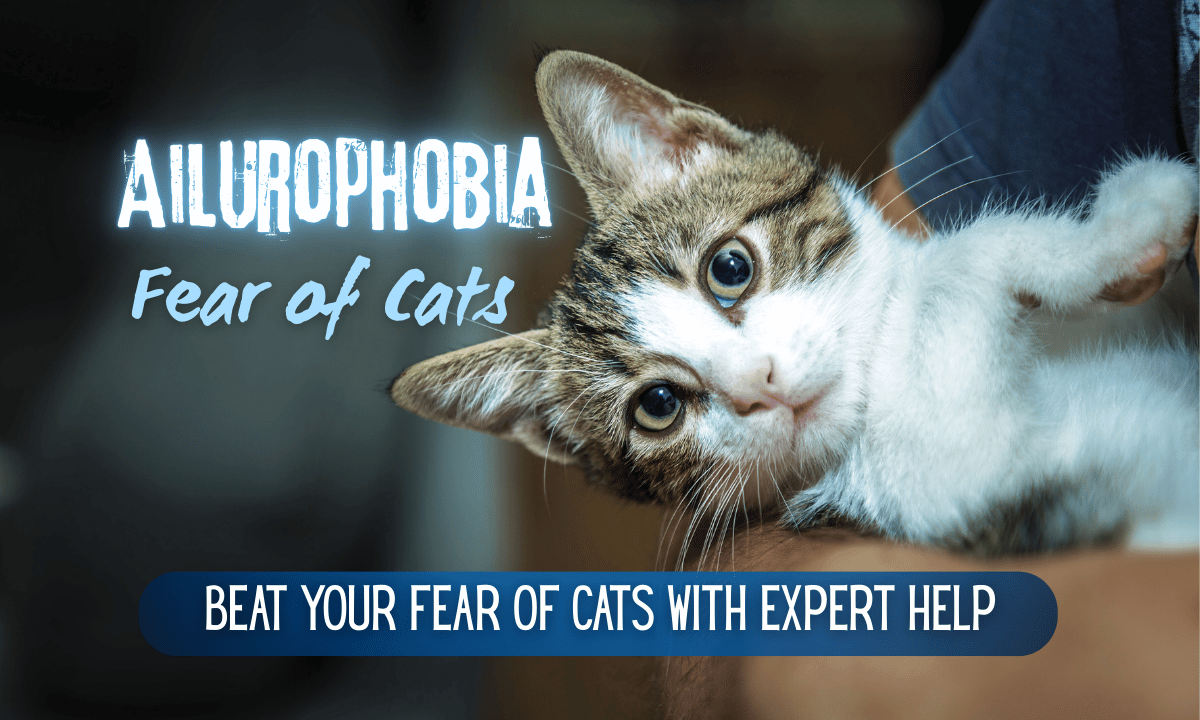
Published: September, 2025
For many, cats are cherished companions, offering comfort and affection. Yet, for some, the mere thought of a cat can trigger overwhelming panic. This intense and often debilitating fear of cats is known as ailurophobia. While it might seem unusual to those who adore felines, this specific phobia can profoundly impact a person’s life, dictating where they go, who they visit, and even how they navigate their own neighbourhood.
Living with a phobia means your world can shrink. You might avoid visiting friends who have cats or feel a surge of anxiety when a cat unexpectedly crosses your path. In the UK, it is estimated that over 10 million people have some form of phobia. While statistics for ailurophobia specifically are not widely tracked, animal phobias are among the most common. This means countless individuals are quietly struggling with a condition that affects their daily routines and overall well-being. But you are not alone, and more importantly, this fear is something you can overcome.
As a Clinical Hypnotherapist with over 25 years of experience in holistic wellness, I have helped many people reclaim their lives from the grip of phobias. This article will explore what ailurophobia is, its symptoms and causes, and the powerful, effective treatments available, including hypnotherapy, to help you move forward with confidence and calm.
What is Ailurophobia?
Ailurophobia is the specific, irrational, and overwhelming fear of cats. Also known as gatophobia, elurophobia, or felinophobia, it goes far beyond a simple dislike. A person with ailurophobia experiences intense anxiety that is disproportionate to any actual danger a cat might pose. This fear can be triggered by seeing a cat, hearing one meow, or even looking at pictures of scared cats or just thinking about cats.
This phobia of cats is a type of anxiety disorder. The anxiety can be so severe that it leads to avoidance behaviours. For instance, someone might refuse to visit a loved one’s home because they own a cat, or feel intense panic when walking down a street where stray cats are common. The constant vigilance and worry about a potential encounter can be mentally and emotionally exhausting.
The ailurophobia meaning is rooted in the Greek words “ailouros” (cat) and “phobos” (fear). It’s a condition where the mind has created a powerful, negative association with cats, often stemming from a past event or learned behaviour. Understanding what is a phobia of cats called is the first step, but exploring its roots and symptoms is key to finding a path to freedom.
What Does Someone with Ailurophobia Fear?
The specific fears associated with ailurophobia can vary from person to person. Common concerns include:
- Fear of being attacked: An intense worry about being scratched, bitten, or jumped on by a cat.
- Fear of disease: A belief that cats are unhygienic or carriers of dangerous diseases.
- Superstitious fears: Some associate cats, particularly black cats, with bad luck or evil, a belief rooted in centuries-old folklore.
- Unpredictability: A fear stemming from the belief that cats are unpredictable and cannot be trusted.
- The sounds and movements: For some, the hissing sound, a sudden movement, or even a cat’s purr can be a powerful trigger.
This cat phobia can manifest in a spectrum of severity. Some people may only feel anxious around a cat that is very close, while others experience panic from seeing a cat from a distance or even watching one on television.
What are the Symptoms of Ailurophobia?
The symptoms of ailurophobia can be both psychological and physical, often occurring together when a person is exposed to a trigger. These responses can feel uncontrollable and incredibly distressing.
Psychological Symptoms
The mental and emotional toll of a cat phobia is significant. It’s not just about feeling scared in the moment; the anticipatory anxiety can be just as debilitating.
- Overwhelming Panic: An intense feeling of terror when seeing, hearing, or thinking about cats.
- Constant Worry: Spending an excessive amount of time worrying about potential encounters with cats.
- Avoidance: Actively changing routines to avoid places where cats might be present.
- Loss of Control: A feeling that the fear is taking over, leading to a sense of powerlessness.
- Distorted Thinking: Believing that any encounter with a cat will result in harm or catastrophe.
- Difficulty Concentrating: When in a situation where a cat is nearby, it can be impossible to focus on anything else.
Physical Symptoms
When faced with a trigger, the body reacts as if it is in real danger. This physiological response is automatic and can be very frightening.
- Rapid Heartbeat: Heart palpitations or a pounding chest.
- Breathing Difficulties: Shortness of breath or a feeling of being smothered.
- Trembling and Shaking: Uncontrollable shaking of the hands or entire body.
- Sweating: Breaking out in a cold sweat.
- Nausea or Stomach Upset: Feeling sick or having “butterflies” in the stomach.
- Dizziness or Light-headedness: A feeling of being faint or unsteady.
- Chest Pain: Tightness or discomfort in the chest area.
- Dry Mouth: A common physical symptom of intense anxiety.
These symptoms can culminate in a full-blown panic attack, which is a sudden and overwhelming episode of intense fear. This cat panic can be so severe that the person genuinely believes they are having a heart attack or are about to die.
What Causes a Fear of Cats?
The origins of ailurophobia are complex and often unique to the individual. There is rarely a single, simple answer to the question, “Why are cats afraid to some people?” The causes can stem from personal experiences, learned behaviours, or even historical and cultural influences.
Traumatic Past Experiences
The most common cause of a specific phobia is a traumatic event, usually during childhood. A frightening encounter with a cat, such as being scratched, bitten, or cornered, can leave a lasting emotional imprint. The brain forms a powerful association between cats and a feeling of danger. Even witnessing someone else have a negative experience with a cat can be enough to trigger the phobia in an observer. Because children have fewer coping mechanisms, a scary event that an adult might brush off can become the seed of a lifelong fear.
Learned Behaviours
Phobias can also be learned from family members or peers. If a child grows up with a parent who has a profound fear of cats, they may internalise that fear themselves. They observe the parent’s anxious reactions and learn to associate cats with danger. This observational learning is a powerful way that fears are transmitted through generations, even without any direct negative experience.
Historical and Cultural Factors
For centuries, cats—especially black cats—have been linked with bad luck, witchcraft, and evil. These superstitions, though largely dismissed today, can still linger in our collective subconscious. Stories and media portrayals of cats as sinister or malevolent creatures can reinforce negative perceptions. For some, these cultural narratives can contribute to an underlying sense of unease that develops into a full-blown phobia.
The Role of the Brain
From a neurological perspective, phobias are linked to the amygdala, the part of the brain responsible for processing fear. When a person with ailurophobia encounters a cat, the amygdala triggers an alarm, releasing stress hormones like adrenaline and cortisol. This initiates the fight-or-flight response, causing the physical symptoms of panic. Over time, this response becomes a conditioned reflex, happening automatically whenever a trigger is present.
How is Ailurophobia Treated?
Living with a phobia of cats can be incredibly challenging, but it is highly treatable. The goal of treatment is not necessarily to make you love cats but to reduce your fear response so that you can live your life without anxiety and avoidance. As a clinical hypnotherapist, I use a blend of techniques tailored to your unique needs, empowering you to regain control.
Clinical Hypnotherapy
Hypnotherapy is a powerful and effective tool for treating phobias. It works by accessing the subconscious mind, where deep-seated beliefs and automatic fear responses are stored. During a session, you are guided into a state of deep relaxation, similar to daydreaming. In this relaxed state, your mind is more open to positive suggestions.
We can use this state to:
- Identify the Root Cause: Sometimes, the original event that caused the phobia is forgotten. Hypnotherapy can help uncover this initial sensitising event, allowing you to process it from a safe, adult perspective.
- Reframe Negative Beliefs: We can work to change the subconscious programming that links cats with danger. Instead, we can create new, calmer associations.
- Visualisation Techniques: You can mentally rehearse encountering cats in a calm and controlled way. This practice, known as desensitisation, helps your brain learn that it no longer needs to trigger a fear response.
Research has consistently shown the benefits of hypnotherapy for anxiety disorders. A review published in the Cochrane Library found that hypnotherapy can be a beneficial ancillary treatment for anxiety. For phobias, the ability to directly address the subconscious fear response makes it a particularly efficient and lasting solution.
Cognitive Behavioural Therapy (CBT)
Cognitive Behavioural Therapy (CBT) is another highly effective approach that is often integrated with hypnotherapy. CBT focuses on identifying and challenging the negative thought patterns that fuel the phobia.
With CBT, you learn to:
- Recognise Irrational Thoughts: For example, the thought “that cat is going to attack me” can be examined and challenged. What is the evidence for this? How likely is it to happen?
- Develop Coping Strategies: You learn practical techniques, such as deep breathing and mindfulness, to manage anxiety when it arises.
- Gradual Exposure: CBT often involves a process called systematic desensitisation, where you are gradually exposed to your fear in a controlled way. This might start with looking at pictures of cats and slowly progress to being in the same room as a cat in a carrier.
A study from the NHS UK highlighted CBT as one of the most effective treatments for anxiety disorders. When combined with the deep subconscious work of hypnotherapy, the results can be transformative.
The Power of a Blended Approach for Ailurophobia
At Interlude Hypnotherapy, I use a solution-focused approach that combines the best of these therapies. We don’t just dwell on the problem; we focus on how you want to feel and what your life will look like without this fear. By blending clinical hypnotherapy and CBT, we can tackle the phobia from both the conscious and subconscious levels, offering a holistic path to lasting change. This personalised combination ensures that we address not only the symptoms but also the underlying cause of your ailurophobia.
Start Your Journey to Overcoming Fear
If the fear of cats is holding you back, you don’t have to face it alone. Overcoming a phobia is not about willpower; it’s about having the right tools and support. With a compassionate and personalised approach, you can learn to manage your anxiety, dismantle your fear, and step into a calmer, more confident future.
Imagine being able to visit friends without asking if they have a cat. Picture yourself walking outside without constantly scanning for potential triggers. This freedom is achievable.
I invite you to book a free 15-minute, no-obligation chat to discuss how hypnotherapy can help you. Together, we can create a tailored plan to help you overcome your ailurophobia and empower you to live the life you deserve.

Additionally, you can get in touch via WhatsApp or email by clicking the button below.
Frequently Asked Questions (FAQ) About Ailurophobia
Read more articles about fear and phobia
➡️Trypanophobia (Fear of Needles): Understanding and Overcoming It
➡️ Aerophobia (Fear of Flying) | Understanding and Overcoming
➡️ Fear of Wasps | Understanding and Overcoming Spheksophobia
➡️ Musophobia | How to Beat Your Fear of Rats & Mice
➡️ Arachnophobia Disease | Causes, Symptoms, and Effective Treatments
➡️ Entomophobia | Overcoming the Fear of Insects
➡️Scoleciphobia | Understanding and Overcoming the Fear of Worms
➡️Fear of Moths | Overcoming Mottephobia/Lepidopterophobia


